
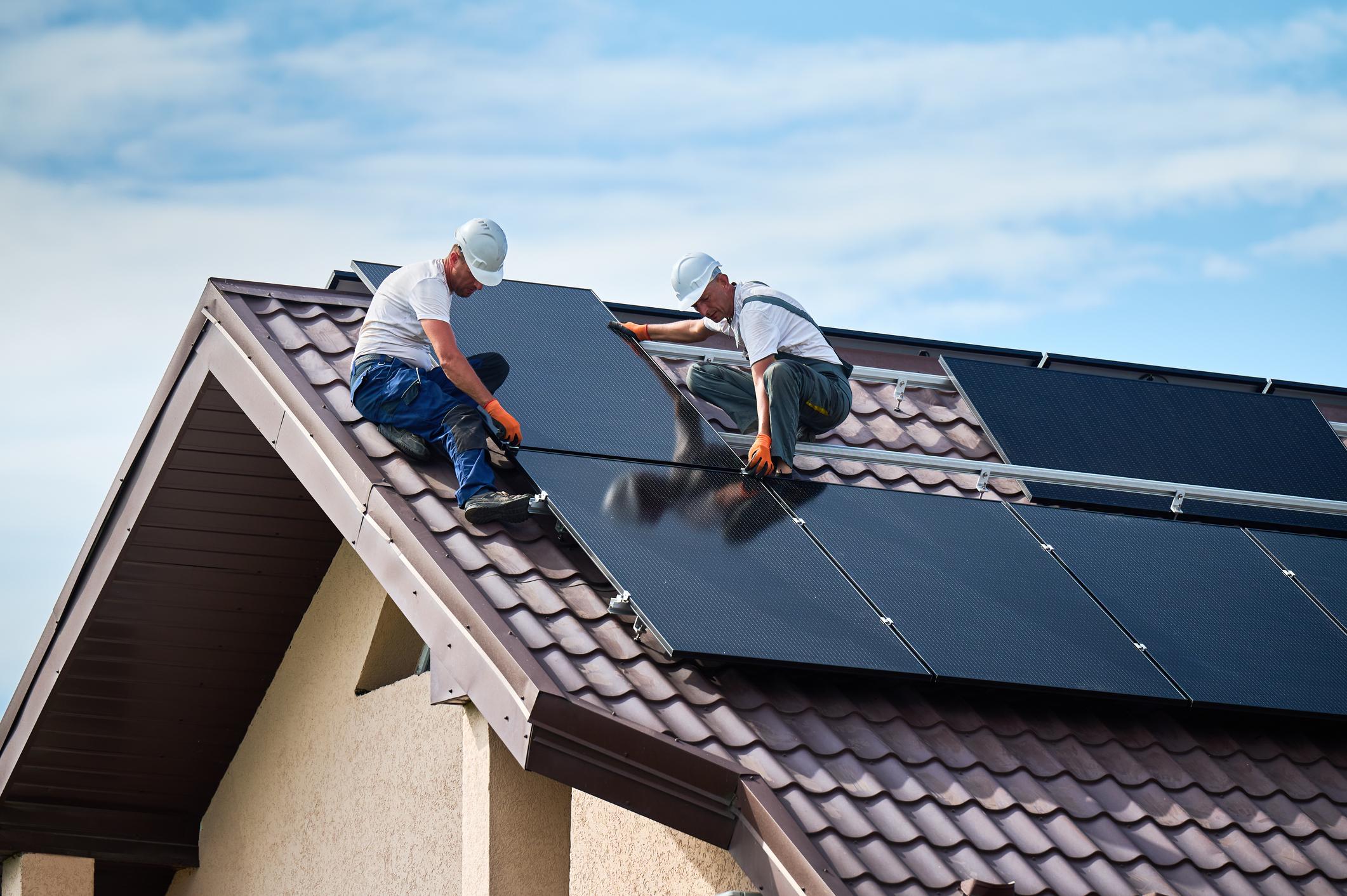
Solar panels and other forms of sustainable roofing create additional weight and pressure on the structure of a building. Sometimes things go wrong and this additional weight causes damage to the building. Can the owner then hold the installer of the solar panels or the installer of the roofing liable for that damage? In two recent cases, the subdistrict court judge in Utrecht ruled: no, that is not possible. How future cases will be decided, however, depends on the circumstances.
The owner of a commercial building with an upstairs residence has 43 solar panels installed on the roof of the building. The installer discusses the possibility of carrying out a structural calculation in advance, but the owner decides against this due to the costs. Furthermore, the installer’s general terms and conditions state that, by accepting the quotation, the owner declares “that the roof of the building is in good condition.”
Six months after the installation of the solar panels, a break in the skylight and cracks in the home become visible. The owner holds the installer liable. According to the owner, the installer would have breached his duty to warn with regard to the structural suitability of the building.
The subdistrict court judge rules that the installer was not obliged to carry out structural calculations and did not breach his duty to warn. According to the judge, it was the owner’s responsibility that the roof was suitable for the solar panels, given the contractor’s general terms and conditions. There is indeed a duty to warn for the installer (pursuant to Article 7:754(1) of the Dutch Civil Code), but according to the judge this duty was not breached because “the building appeared to be in good condition at the time.” The installer therefore had no reason to doubt that the building was suitable for the additional load of the solar panels.
The subdistrict court judge rules that the installer is not liable and dismisses the owner’s claims.
The owner of a garden with a canopy has sedum roofing (vegetated roofing) installed on this existing canopy by a landscaper. Less than a year later, the canopy collapses.
Afterwards, the owner has an expert inspect the collapsed canopy. This expert determines that the canopy was defectively constructed. The canopy appeared to be attached to the wall of the neighboring property with only two hammer-in anchors. In addition, the beams of the canopy were connected to each other only with screws driven into the end grain of the cross beams, rather than with proper wood joints or beam hangers. Finally, the distance between the cross beams was large.
The owner holds the landscaper liable, arguing that the landscaper should have warned him about the unsuitability of the canopy and the risk of collapse.
The subdistrict court judge rules that the landscaper did not breach his duty to warn pursuant to Article 7:754(1) of the Dutch Civil Code. After all, most of the defects in the canopy only became visible after the collapse. It was, however, visible to the landscaper that the distance between the cross beams was large. It has not been established, however, that this specific defect could have led to the collapse of the canopy. At the time the sedum roofing was installed, the landscaper therefore could not have known that the structure of the canopy was unsuitable, according to the judge.
The subdistrict court judge rules that the landscaper is not liable and dismisses the owner’s claims.
In both judgments, the central issue was whether the installer or the landscaper had breached their duty to warn the client about the unsuitability of the existing structure to bear the roofing. This duty to warn therefore does not apply only to contractors who construct a building, but to all contractors within the meaning of the Dutch Civil Code (BW). The concept of “contractor” must be interpreted broadly. Contractors are all parties who, for a client, create and deliver “a work of a tangible nature” (Article 7:750(1) of the Dutch Civil Code). This includes, for example, car mechanics and installers of kitchens and solar panels, who are also contractors within the meaning of the Dutch Civil Code. Most agreements they enter into therefore also qualify as “contracts for work” within the meaning of the Dutch Civil Code. As a result, they are also subject to this duty to warn.
With the introduction of the “Quality Assurance for Building Act” (Wet kwaliteitsborging voor het bouwen), an additional requirement was added to the duty to warn as of 1 January 2024, namely that the warning must be given “in writing and unambiguously” (Article 7:754(2) of the Dutch Civil Code). The contractor must also inform the client in a timely manner whether the assignment can still be properly carried out in view of the identified defects. This did not arise in the cited judgments because the subdistrict court judge held that the duty to warn had not been breached.
The cited judgments show the picture that the installer or installer of roofing is only required to warn the client if defects in the building are observable to that installer. There is no (far-reaching) duty on the installer to investigate the load-bearing capacity of the building’s structure.
The judgments are in line with the case law of the Supreme Court, which previously ruled that, among other things, “the degree of obviousness of the inadequate nature of the client’s requirements” and “the expertise (…) of a contractor” are relevant (see, among others, ECLI:NL:PHR:2022:736, paragraph 2.15). In short, was the defect sufficiently clear to the contractor, given his expertise?
It is therefore in principle up to the owner/client to check whether the structure of the building is suitable to bear solar panels or other sustainable roofing. Whether a duty to warn also rests on the contractor will depend on the circumstances of the specific case.
The above judgments, however, do not guarantee installers or roofing contractors that damage caused by a defect in the existing structure will never be at their expense. It is advisable for installers to immediately report any potential defects in the structure — however minor — to the client in writing and, if necessary, to advise having a structural calculation carried out.
We regularly handle disputes concerning contracts for work, in which the duty to warn also frequently arises. Do you have any questions about this? Then contact David Wenniger, Per van der Kooi or Jacco van Lint, lawyers in real estate law.
You can read the judgments here:
Would you like to receive a monthly overview of updates and blogs in your inbox? Then sign up for our newsletter!