
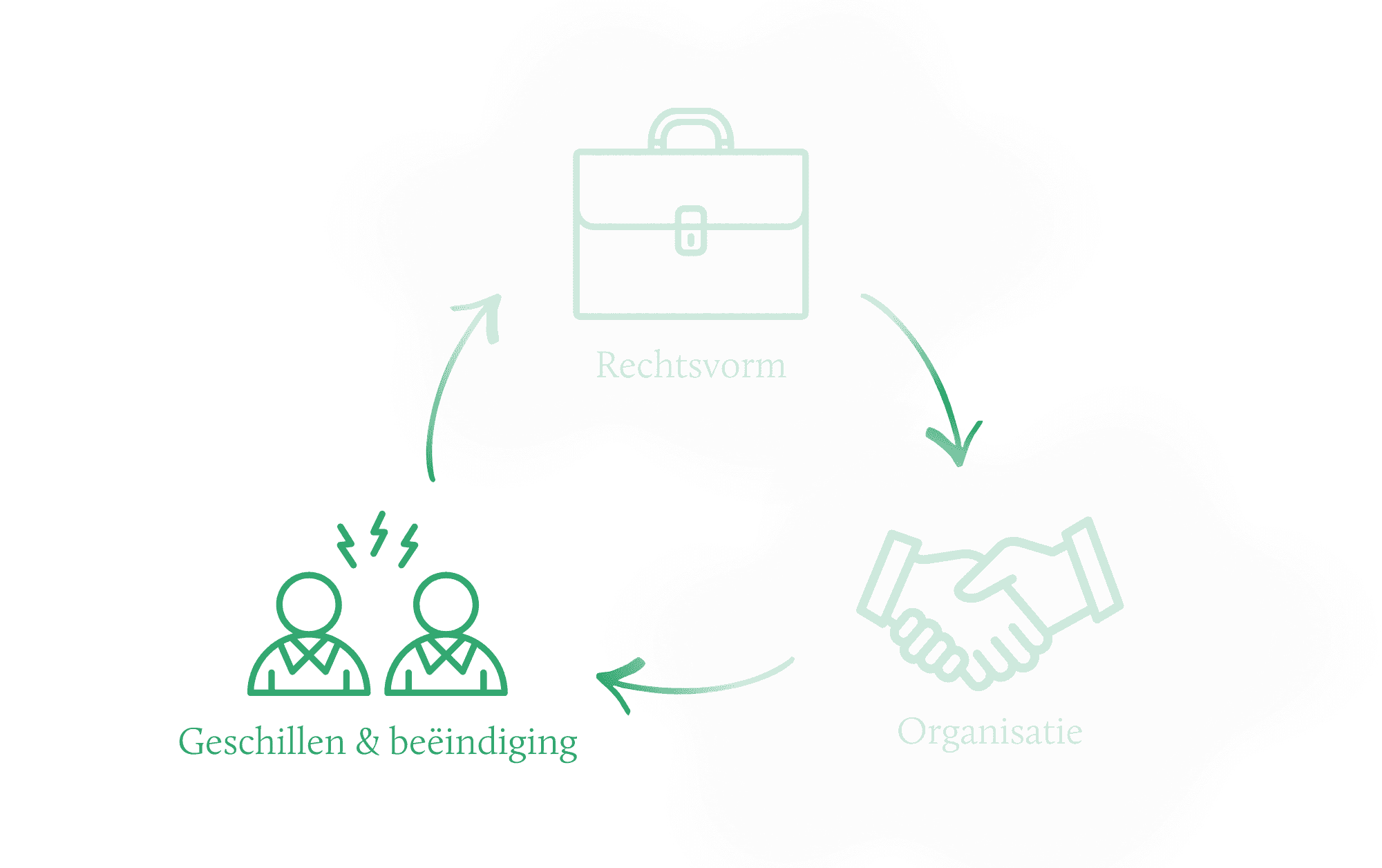
In this ten-part blog series, we take a closer look at the life cycle of a business. Which legal structure should I choose? What is required to incorporate a company? How does a company come to an end? Who are the stakeholders involved, and how do you deal with a business partner who leaves? In this seventh instalment, we discuss a topic that every entrepreneur will face sooner or later: disputes with suppliers and clients.
A business disagreement becomes legally relevant as soon as one of the parties fails to fulfil its obligations under the agreement. The law refers to this as a failure in the performance of an obligation (Article 6:74 of the Dutch Civil Code). Think of a supplier who delivers late, a service provider who delivers poor-quality work, delivered goods that turn out not to meet what was agreed, or a client who fails to pay. This is also known as breach of contract.
Many disputes can be prevented, or at least kept manageable, by making clear arrangements in advance. A clear contract is essential in this respect. Do not only set out the core performance (what is to be delivered, when and at what price), but also include arrangements on what happens if things go wrong. Consider provisions on payment terms, delivery conditions, limitations of liability and penalty clauses. Equally important are arrangements on dispute resolution: which court has jurisdiction in the event of a conflict? Will mediation or arbitration be attempted before proceedings are initiated? The clearer these arrangements, the less room there is for discussion afterwards.
If a dispute does arise, going to court does not always have to be the first step. In many cases, it is advisable to first try to reach a solution between the parties themselves (out of court). The first step is usually to send a notice of default: a written demand giving the other party a reasonable period of time to still perform.
If the other party does not respond, you may consider entering into negotiations or engaging a mediator. Mediation is an accessible and often faster way of reaching a solution, without the matter immediately escalating into legal proceedings.
If out-of-court options do not produce a result, the remaining option is to go to court. There are several routes:
Disputes with suppliers and clients are sometimes unavoidable. What matters in any case is having good contracts: the clearer the arrangements, the stronger your position when things go wrong. If a dispute threatens to escalate, act in good time. Send a notice of default, explore out-of-court options and seek legal assistance when necessary. Whether it concerns summary proceedings, proceedings on the merits or a prejudgment attachment, an attorney at law can help you take the right steps.
Do you have questions about a dispute with a supplier or client, or would you like to know what your legal options are? Please feel free to contact Jarno de Graaf or Manon Hoekstra, attorneys at law in Corporate Law.
This blog is part of the blog series ‘The Life Cycle of a Business’.
Would you like to receive our latest legal updates and blogs directly in your inbox each month? Subscribe to our newsletter.